

LANGUAGE: Phrasal Verbs (4)
Phrasal Verbs (4)

We are presenting these phrasal verbs in small groups related to a common activity or theme. This week’s phrasal verbs involve STUDY & EDUCATION—though not exclusively, as you almost certainly will see, these same verbs used in other areas and activities, and quite possibly with a completely different meaning:
Presentem aquests phrasal verbs en petits grups relacionats amb una activitat o un tema comú. Els phrasal verbs d’aquesta setmana estan relacionats amb l’ESTUDI I L’EDUCACIÓ—tot i que no exclusivament, ja que, com gairebé segur que veuràs, aquests mateixos verbs s’utilitzen en altres àrees i activitats, i molt possiblement amb un significat completament diferent:
Presentamos estos phrasal verbs en pequeños grupos relacionados con una actividad o tema común. Los phrasal verbs de esta semana están relacionados con el ESTUDIO Y LA EDUCACIÓN—aunque no exclusivamente, ya que, como casi seguro verás, estos mismos verbos se usan en otras áreas y actividades, y muy posiblemente con un significado completamente diferente:
STUDY & EDUCATION
- Hand out: To distribute something to the class, usually by the teacher. Distribuir alguna cosa a la classe, normalment per part del professor. Distribuir algo a la clase, normalmente por parte del profesor.
Example: The teacher handed out a syllabus on the first day of class. https://www.oxfordlearnersdictionaries.com/definition/english/hand-out?q=hand+out
- Hand in / turn in: For students to give their work assignment or homework to the teacher. Que els estudiants lliurin el seu treball o deures al professor. Que los estudiantes entreguen su trabajo o deberes al profesor.
Example: Teacher: You will need to hand in your five-page essays on Friday. https://www.oxfordlearnersdictionaries.com/definition/english/hand-in?q=hand+in
- Fall behind: To not keep up to date/current with classwork or at the same level as your classmates. No mantenir-se al dia amb les tasques de classe o no estar al mateix nivell que els companys. No mantenerse al día con las tareas de clase o no estar al mismo nivel que los compañeros.
Example: Mary was ill for two weeks and has fallen behind the rest of the class. https://www.oxfordlearnersdictionaries.com/definition/english/fall-behind?q=fall+behind
- Drop out: To officially leave the course or school for any reason. Abandonar oficialment el curs o l’escola per qualsevol motiu. Abandonar oficialmente el curso o la escuela por cualquier motivo.
Example: I found the Physics class too difficult and decided to drop out. Or: He dropped out of university and opened his own business. https://www.oxfordlearnersdictionaries.com/definition/english/drop-out?q=drop+out
Note: if you go to the links, you will see that most of these words have several meanings! This is one of the reasons why phrasal verbs are so difficult to learn. Don’t get discouraged. Try to learn them in small, related groups like the six above.
Nota: si visites els enllaços, veuràs que la majoria d’aquests verbs tenen diversos significats! Aquesta és una de les raons per les quals els phrasal verbs són tan difícils d’aprendre. No et desanimis. Intenta aprendre’ls en grups petits i relacionats, com els sis que tens aquí.
Nota: si visitas los enlaces, verás que la mayoría de estos verbos tienen varios significados. ¡Esta es una de las razones por las que los phrasal verbs son tan difíciles de aprender! No te desanimes. Intenta aprenderlos en grupos pequeños y relacionados, como los seis de arriba.


WHO AM I? (4)
Who am I? (4)
Who am I? Where you are given information or clues about an actor, singer, athlete, politician, or other celebrity, and you guess who they are. Answer at the end. Were you correct?
Qui sóc? On se’t donen informacions o pistes sobre un actor, cantant, atleta, polític o una altra celebritat, i tu has d’endevinar qui és. La resposta és al final. Has encertat?
¿Quién soy? Donde se te da información o pistas sobre un actor, cantante, atleta, político u otra celebridad, y tú debes adivinar quién es. La respuesta está al final. ¿Has acertado?
LANGUAGE: USA vs UK (2)
American vs British English (2)
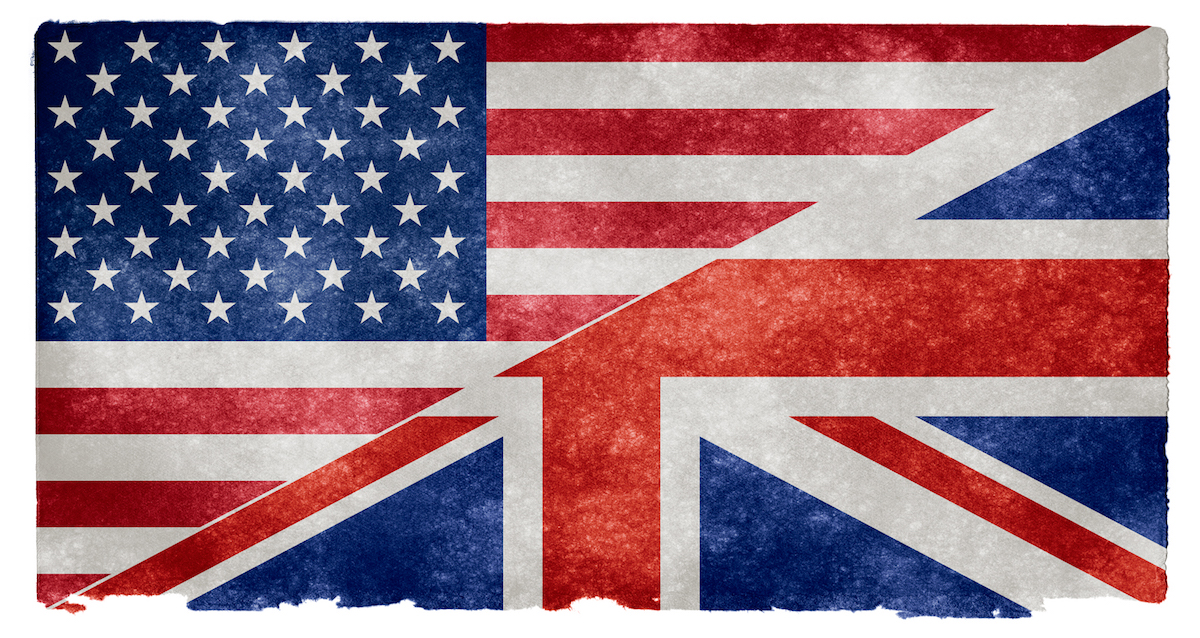
“Two nations divided by a common language.” Oscar Wilde
Not only are American and British words sometimes spelled differently (right there: spelled vs spelt), but often totally different words are used by speakers to express themselves. Generally speaking, your texts will use British English, but it is a good idea to learn common American equivalent words to avoid confusion and misunderstanding.
No tan sols les paraules americanes i britàniques a vegades s’escriuen de manera diferent (aquí mateix: spelled vs spelt), sinó que sovint s’utilitzen paraules totalment diferents perquè els angloparlants s’expressin. En termes generals, els teus textos utilitzaran anglès britànic, però és una bona idea aprendre paraules americanes equivalents habituals per evitar confusions i malentesos.
No solo las palabras americanas y británicas a veces se escriben de manera diferente (por ejemplo: spelled vs spelt), sino que a menudo se usan palabras totalmente distintas para que los angloparlantes se expresen. En términos generales, tus textos usarán inglés británico, pero es buena idea aprender palabras equivalentes americanas comunes para evitar confusiones y malentendidos.
Here are ten American and British words that have the same meaning but, as you can see, are not similar in any way:
Aquí tens deu paraules americanes i britàniques que tenen el mateix significat però que, com pots veure, no s’assemblen gens.
Aquí tienes diez palabras americanas y británicas que tienen el mismo significado pero que, como puedes ver, no se parecen en absoluto.
AMERICAN BRITISH
checkers draughts
garbage man dustman
movie film
apartment flat
yard garden
first floor ground floor
vacation holiday
sick ill
elevator lift
truck lorry
LANGUAGE: Commonly Misspelled Words (2)
Commonly Misspelled Words (2)
A Dirty Dozen:
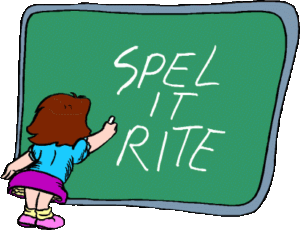
As we know, spelling in English can sometimes be difficult. Here is a list of 12 words commonly misspelled in English:
Com sabem, l’ortografia en anglès pot ser de vegades difícil. Aquí tens una llista de 12 paraules que sovint s’escriuen malament en anglès:
Como sabemos, la ortografía en inglés puede ser a veces difícil. Aquí tienes una lista de 12 palabras que se suelen escribir mal en inglés:
acquire twelfth leisure February
because receive weird business
acknowledge schedule rhythm chief
LANGUAGE: Homophones (2)
Homophones (2)

8 Homophones / Homòfons / Homófonos:
Homophones are two words or more that have the same pronunciation but with different meanings and spellings. For example: new and knew are homophones. Make sure you can distinguish and use the words below correctly. Some are easy, some more difficult! (if you don’t know the meaning of a word, look it up!)
Els homòfons són dues o més paraules que tenen la mateixa pronunciació però amb significats i ortografies diferents. Per exemple: new i knew són homòfons. Assegura’t de poder distingir i utilitzar correctament les paraules següents. Algunes són fàcils, altres més difícils! (Si no saps el significat d’una paraula, busca-la!)
Los homófonos son dos o más palabras que tienen la misma pronunciación pero con significados y ortografías diferentes. Por ejemplo: new y knew son homófonos. Asegúrate de poder distinguir y usar correctamente las palabras que aparecen a continuación. ¡Algunas son fáciles, otras más difíciles! (Si no sabes el significado de una palabra, búscala!)
-
-
-
-
-
-
-
-
-
-
-
- but butt
- weather whether
- peace piece
- hair hare
- guest guessed
- wine whine
- cereal serial
-
-
-
-
-
-
-
-
-
-
SPANISH SPEAKERS (4)
English for Spanish Speakers (4)

Cognates / Cognats / Cognados
There are three types of COGNATES: Perfect, True, and False, this latter perhaps better known as a “False Friend.” In this entry, we will look at True Cognates. These are English and Spanish words which are either spelled the same or similar and often sound alike in both languages. In other words, it’s near-perfect but not identical. For example, leader and líder. Both words have similar sound and spelling and they (generally) have the same meaning.
Hi ha tres tipus de COGNATS: perfectes, veritables i falsos, aquests últims més coneguts com a “falsos amics”. En aquesta entrada veurem els cognats veritables. Són paraules angleses i castellanes que s’escriuen igual o de manera semblant i sovint sonen igual en ambdues llengües. En altres paraules, són gairebé perfectes, però no idèntiques. Per exemple: leader i líder. Totes dues tenen una sonoritat i una ortografia semblants i (generalment) comparteixen el mateix significat.
Hay tres tipos de COGNADOS: perfectos, verdaderos y falsos, estos últimos más conocidos como “falsos amigos”. En esta entrada veremos los cognados verdaderos. Son palabras en inglés y español que se escriben igual o de manera similar y que a menudo suenan parecido en ambos idiomas. En otras palabras, son casi perfectos, pero no idénticos. Por ejemplo: leader y líder. Ambas palabras tienen una pronunciación y ortografía similares y (generalmente) el mismo significado.
¡Aquí tienes 20 más!
Here are 20 more! Aquí en tens 20 més! ¡Aquí tienes 20 más!
- accident → accident → accidente
- active → actiu → activo
- adult → adult → adulto
- artist → artista → artista
- bicycle → bicicleta → bicicleta
- center / centre → centre → centro
- coast → costa → costa
- desert → desert → desierto
- disaster → desastre → desastre
- energy → energia → energía
- family → família → familia
- guide → guia → guía
- hour → hora → hora
- insects → insectes → insectos
- line → línia → línea
- nervous → nerviós → nervioso
- panic → pànic → pánico
- police → policia → policía
- rock → roca → roca
- surprise → sorpresa → sorpresa
PUB QUIZ (3)
Pub Quiz 3
A pub quiz is a contest normally held in a bar or pub. It’s a modern example of a pub game, becoming part of British culture in the 1970s, and soon afterwards introduced into Irish pubs and then spreading internationally. It involves rounds of quiz questions addressed to teams of players, touching on general knowledge (geography, science, & nature), sport, entertainment, true & false, Who am I? (see above), music, puzzles, and more. Test yourself, learn more vocabulary, and amaze your friends with your knowledge!
Un pub quiz és un concurs que normalment té lloc en un bar o pub. És un exemple modern de joc de pub, que es va convertir en part de la cultura britànica als anys 1970 i, poc després, es va introduir als pubs irlandesos i es va estendre internacionalment. Consisteix en rondes de preguntes dirigides a equips de participants, que tracten sobre coneixements generals (geografia, ciència i natura), esport, entreteniment, vertader o fals, Qui sóc? (Who am I?), música, trencaclosques i més. Posa’t a prova, aprèn més vocabulari i deixa els teus amics bocabadats amb els teus coneixements!
Un pub quiz es un concurso que normalmente se celebra en un bar o pub. Es un ejemplo moderno de juego de pub, que pasó a ser parte de la cultura británica en la década de 1970 y, poco después, se introdujo en los pubs irlandeses y se difundió internacionalmente. Consiste en rondas de preguntas dirigidas a equipos de jugadores, que abarcan conocimientos generales (geografía, ciencia y naturaleza), deporte, entretenimiento, verdadero o falso, ¿Quién soy yo? (Who am I?), música, rompecabezas y más. ¡Ponte a prueba, aprende más vocabulario y sorprende a tus amigos con tus conocimientos!
FUN FACTS (4)
10 Fun Facts about the United Kingdom

- The United Kingdom isn’t Great Britain. Great Britain doesn’t include Northern Ireland, but the United Kingdom does.
- The USA, Nigeria, Pakistan, India, and the Philippines all have more English speakers than the United Kingdom.
- Queen Elizabeth II visited over 100 countries on official duties although she never had a passport.
- All these foreigners lived in London for a time: Hitler’s half-brother, Karl Marx, Sigmund Freud, Voltaire, Vincent Van Gogh, Edgar Allen Poe, Mahatma Gandhi, and Ho Chi Minh.
- The oldest public zoo in the world opened in 1828 in London.
- The UK has about three times as many people as Australia, but Australia is more than 30 times the land size of the UK.
- About 2,000 new words were added to the English by one man: William Shakespeare.
- The United Kingdom does not have a written constitution.
- Though not widely used, four ancient languages are still spoken in the UK: Scottish Gaelic, Irish Gaelic, Welsh, and Breton.
- The tallest Ferris Wheel in the world is the London Eye (135 meters); it takes nearly 30 minutes for one complete rotation.
10 curiositats divertides sobre el Regne Unit
- El Regne Unit no és Gran Bretanya. Gran Bretanya no inclou Irlanda del Nord, però el Regne Unit sí.
- Els EUA, Nigèria, Pakistan, l’Índia i les Filipines tenen més parlants d’anglès que el Regne Unit.
- La reina Elisabet II va visitar més de 100 països en tasques oficials, tot i que mai no va tenir passaport.
- Tots aquests estrangers van viure a Londres durant un temps: el mig germà de Hitler, Karl Marx, Sigmund Freud, Voltaire, Vincent Van Gogh, Edgar Allan Poe, Mahatma Gandhi i Ho Chi Minh.
- El zoològic públic més antic del món va obrir el 1828 a Londres.
- El Regne Unit té aproximadament tres vegades més població que Austràlia, però Austràlia és més de 30 vegades més gran en extensió.
- Uns 2.000 mots nous van ser afegits a l’anglès per un sol home: William Shakespeare.
- El Regne Unit no té una constitució escrita.
- Encara que no s’utilitzen àmpliament, quatre llengües antigues encara es parlen al Regne Unit: el gaèlic escocès, el gaèlic irlandès, el gal·lès i el bretó.
- La nòria més alta del món és el London Eye (135 metres); triga gairebé 30 minuts a fer una volta completa.
10 datos curiosos sobre el Reino Unido
- El Reino Unido no es Gran Bretaña. Gran Bretaña no incluye Irlanda del Norte, pero el Reino Unido sí.
- Estados Unidos, Nigeria, Pakistán, India y Filipinas tienen más hablantes de inglés que el Reino Unido.
- La reina Isabel II visitó más de 100 países en funciones oficiales, aunque nunca tuvo pasaporte.
- Todos estos extranjeros vivieron en Londres durante un tiempo: el medio hermano de Hitler, Karl Marx, Sigmund Freud, Voltaire, Vincent Van Gogh, Edgar Allan Poe, Mahatma Gandhi y Ho Chi Minh.
- El zoológico público más antiguo del mundo abrió en 1828 en Londres.
- El Reino Unido tiene aproximadamente tres veces más población que Australia, pero Australia es más de 30 veces más grande en extensión territorial.
- Unos 2.000 vocablos nuevos fueron añadidos al inglés por un solo hombre: William Shakespeare.
- El Reino Unido no tiene una constitución escrita.
- Aunque no se usan ampliamente, cuatro lenguas antiguas todavía se hablan en el Reino Unido: gaélico escocés, gaélico irlandés, galés y bretón.
- La noria más alta del mundo es el London Eye (135 metros); tarda casi 30 minutos en hacer una vuelta completa.
DECEMBER CALENDAR 2025
Each month we will give you a list of special happenings in the UK, USA, and other English-Speaking countries, some serious, others not so much!
1: Cyber Monday
It was created by retailers to encourage people to shop online and has become the digital cousin to Black Friday—both events allegedly offering exceptional discounts for shoppers and becoming as much a part of the holiday celebrations as Christmas lights, caroling, and mistletoe. Online buyers believe they are being offered low prices on such items as TVs, laptops, smart home devices, appliances, and beauty products, when, in reality, retailers have just added a new way to separate shoppers—especially impulsive ones—from their hard-earned money with the stratagem of FOMO (“Fear of Missing Out”). Researchers say that in reality only 2% of products are cheaper than at other times of the year, as retailers artificially inflate prices beforehand to appear to offer bigger discounts on these “sales” days!
© European Union, 2025, CC BY 4.0, via Wikimedia Commons

2: Giving Tuesday
It is observed on the Tuesday after American Thanksgiving. The day is to remind us to stop and think about those people less fortunate and raise awareness about the importance of charity and helping people in need. Quite unsurprisingly, it’s never gained any popularity.
2: National Mutt Day
It is observed on this date annually. It celebrates mixed breed dogs, their unique looks and personalities, and reminds people that these dogs also need loving homes and affection. Around 80% of dogs in the US in shelters are mixed breed and are often overlooked because of people’s desire for pure-bred and designer dogs, which often puts these mixed breed dogs in danger of being euthanized. It should be noted that many if not most pure-bred dogs come from puppy mills and often irresponsible dog breeders, who charge outrageous prices. Who could resist these lovely little rascals below?
3: Rockefeller Center Christmas Tree Lighting
The Rockefeller Center Christmas Tree Lighting ceremony first began in 1933 and is a holiday tradition for New Yorkers and citizens across the United States. Located just outside 30 Rockefeller Plaza, a 75-foot tree is usually put up sometime during November, and on the Wednesday after Thanksgiving it is lit up for the first time. Note: the plaza was named after John D. Rockefeller, a ruthless, miserable, greedy, draft-dodging tycoon, who crushed his competitors by any means and created a vicious monopoly in Standard Oil. Merry Christmas to all New Yorkers and Johnny D!
6: Candle Day
Candle Day—not to be confused with “World Candle Day”—sprung from the marketing geniuses at “Bath & Body Works,” on which day the company provides an amazing discount on their famous 3-wick candles (see below—hard to resist!)…while supplies last. Regrettably, for true candle lovers, there is a limit of 15 candles per person. (Although, for loyalty customers, early online access will be available at 6:00am EST!) Last year, to kickoff this highly anticipated event, two days prior, the company introduced their first “Candle Fest,” which included CEO Gina Boswell ringing the opening bell at the NY Stock Exchange, followed by three Olympic medalists leading a 4-mile run through downtown NY, arriving at a four-meter tall, 3-wick LED candle, which was “lit” by a 3.5 meter long match. The party that followed was hosted by DJ Kyle Cooke. CCO Maurice Cooper gushed, “Millions of our customers celebrate Candle Day by now making it a part of their annual holiday tradition.”
“No one ever went broke underestimating the intelligence of the American public.” – H.L. Mencken
Upon further review, H.L.’s maxim may be out of date in today’s world: New CEO Daniel Heaf announced “Bath & Body Works’ shares have plunged more than 45% this year due to declining sales.” Has the American public wised up? Is it just too broke? Or does B&BW just sell crap?
Reinhard Müller, CC BY-SA 4.0, via Wikimedia Commons

8: Pretend to be a Time Traveler Day
It is perhaps the most bizarre of all holidays to be found. Participants dress up as a character from the past or future and pretend to be time travelers, staying in character around other people by acting confused, excited, or afraid of modern technology. Participants usually choose one of three options: a traveler from a utopian or cliché future, a dystopian future, or the past. Suggestions on how to “participate”:
- Dress in a spacesuit, in armor, or in Victorian-era clothing.
- Act confused by cars, cell phones, televisions, airplanes, and automatic doors.
- Start conversations with televisions. Spend fifteen minutes watching how an automatic door works. Show great excitement & confusion at basic technology.
- Ask people what year it is, and after they answer, say, «Then it’s not too late!» and walk away.
- Hand out small items along with a piece of paper with a phone number on it. Then say, «In thirty years dial this number. You’ll know what to do after that.»
Bryan Ledgard, CC BY 2.0, via Wikimedia Commons

14: National Monkey Day
It commemorates monkeys and «all things simian,” including other non-human primates such as apes, tarsiers, and lemurs. On this day, people around the world join the fun and use Monkey Day to raise awareness about primate welfare and conservation. Fun Facts about Monkeys:
- Monkeys are smart, but apes (chimpanzees, gorillas, orangutangs, & gibbons) are smarter, with more developed brains, and they also live longer.
- Gorillas are up to10 times stronger than humans, eat 30kg of plants daily, learn to recognize faces, have excellent memories, and share 98% of DNA with humans.
- Pygmy Marmosets living in the Amazon are the smallest monkeys in the world, at about 5 inches tall and weighing 4 ounces—about the weight of an apple.
- Mandrills living in central West Africa are the largest monkeys: weighing anywhere from 55 to 119 pounds.
- The Howler monkeys’ roar can be heard from a distance of 5 kilometers away.
- The fastest primate on Earth is the patas monkey (see below), which can reach speeds of 34 mph; compare that with Usain Bolt, who was clocked at 27.3 mph!
Sanjay Acharya, CC BY-SA 4.0, via Wikimedia Commons

16: National Twin Day
It was proclaimed «to celebrate all things twins,» and is a day that «celebrates all the siblings who enjoy a unique connection because of their common birth event.» About two out of three twins are fraternal and the other third are identical. Fraternal twins develop when two eggs are released from a woman’s ovaries and are fertilized by two sperm. The two fertilized eggs produce two children who are genetically unique. The appearance of the twins may be quite similar or may be different. Identical twins develop when one fertilized egg splits or divides in two within a few days of fertilization. Two babies with the same genetic information develop. They look almost identical, but there may be some differences in appearance due to different experiences in the womb and after birth. Unlike fraternal twins, identical twins are always the same sex. Celebrities who have a twin sibling: Scarlett Johanssen, Gisele Bündchen, Aston Kutchner, Rami Malek, Kiefer Sutherland, Van Diesel, Alanis Morissette. Famous mothers of twin children: Beyoncé, Hilary Swank, Mariah Carey, Angelina Jolie, Jennifer Lopez, Julia Roberts, Sarah Jessica Parker, Celine Dion, Jane Seymour, Geena Davis, Angela Bassett, Anna Kournikova, & Madonna.
Carol M. Highsmith, Public domain, via Wikimedia Commons

21: Winter Solstice
It occurs around December 21 or 22 in the Northern Hemisphere. It is a significant observance for some people around the world. Festivals are held in Toronto; Cusco, Peru; Riga, Latvia, and people visit ancient solstice sites at Stonehenge and the Karnak Temple in Egypt. The ancient Romans held a 7-day festival called Saturnalia around this date, in which animals were sacrificed, public banquets were held, gift giving was the norm, along with continual partying, overeating, and drunkenness. It was also characterized by “role reversal,” in which slaves were served meals by their masters, togas were put away in favor of more informal clothing, gambling and dice-playing were allowed, and slaves could even criticize their masters—to a point, as both knew the holiday lasted but a week. The poet Catullus called it, “the best of days.”
Themadchopper, Antoine-François Callet, CC0, via Wikimedia Commons

23: Festivus
It is a quirky, no-frills (see meal below) secular holiday created by the famous American sitcom “Seinfield” as a counterweight the pressures and commercialism that overwhelms much of today’s holiday season. It was introduced in the 1997 episode titled “The Strike” (Season 9, Episode 10). In the last 5 years, the celebration has gained traction among various parts of the public and is now celebrated by those who believe Christmas has become too commercial, or who do not wish to celebrate Christmas because of their faith/beliefs. That said, it is probably only a matter of time until we see Festivus greeting cards and Festivus trees and decorations, then stealth Festivus gift giving and seemingly insignificant Festivus online sales, until it blows up into another day of excessive gift giving and celebration, serving as a warmup among friends for Christmas Day, especially for those traveling to see family over the holidays. You’ve been warned!
4marknelson, CC BY-SA 4.0, via Wikimedia Commons

26: Boxing Day
It has a long and varied history, dating back at least 350 years when it was mentioned in the diary of Samuel Pepys. In 1871, the UK parliament made it an official Bank Holiday, although minority opposition feared it “would encourage laziness or drunkenness among the working classes.” Boxing Day is a public holiday in the UK and Australia; however, not so in the US and parts of Canada. In the past, it was tradition for the rich to give a box of gifts to their servants, as well as money and leftovers from Christmas dinner and bottles of drink. In more recent years, it has, of course, become a huge shopping day, but sales numbers have been tempered by the arrival of Black Friday and Cyber Monday. Other Boxing Day traditions new and old include (now modified) fox hunts; icy plunges into the English Channel; Ireland’s Wren Day; Premier League games; horseraces in Surrey; cricket matches and yacht races in Australia; Newfoundland “mummers” perform plays door-to-door; turkey curry made from leftovers; and finally, former British colonies, taking the name literally, arrange pugilistic matches.
Tiverton : Boxing Day 2019 by Lewis Clarke, CC BY-SA 2.0, via Wikimedia Commons

29: Wounded Knee Day of Reflection
It honors the memory of 200-300 mostly unarmed Lakota Sioux massacred in 1890 by 500 troops of the U.S. 7th Cavalry near Wounded Knee Creek on the Pine Ridge Indian Reservation. On that snowy December morning, hundreds of mounted U.S. troops surrounded a Lakota camp and opened fire, indiscriminately killing Indigenous men, women, and children in a violent massacre. Sensationalist newspapers across the country had been stoking fears in the American public about an uprising by Indigenous peoples who had embraced a religion called Ghost Dance, which some tribes believed would return them to a pre-European state of freedom. 135 years later things haven’t changed much, as a compliant press advocates for war and covers up genocide, which others are only too eager to commit. We’ll end the month and year on that note, hoping for better things in the coming year—as we always do. Happy New Year!
Internet Archive Book Images, No restrictions, via Wikimedia Commons

LANGUAGE: USA vs UK (1)
American vs British English (1)
“Two nations divided by a common language.” Oscar Wilde
Not only are American and British words sometimes spelled differently (right there: spelled vs spelt), but often totally different words are used by speakers to express themselves. Generally speaking, your texts will use British English, but it is a good idea to learn common American equivalent words to avoid confusion and misunderstanding.
No tan sols les paraules americanes i britàniques a vegades s’escriuen de manera diferent (aquí mateix: spelled vs spelt), sinó que sovint s’utilitzen paraules totalment diferents perquè els angloparlants s’expressin. En termes generals, els teus textos utilitzaran anglès britànic, però és una bona idea aprendre paraules americanes equivalents habituals per evitar confusions i malentesos.
No solo las palabras americanas y británicas a veces se escriben de manera diferente (por ejemplo: spelled vs spelt), sino que a menudo se usan palabras totalmente distintas para que los angloparlantes se expresen. En términos generales, tus textos usarán inglés británico, pero es buena idea aprender palabras equivalentes americanas comunes para evitar confusiones y malentendidos.
Here are ten American and British words that have the same meaning but, as you can see, are not similar in any way:
Aquí tens deu paraules americanes i britàniques que tenen el mateix significat però que, com pots veure, no s’assemblen gens.
Aquí tienes diez palabras americanas y británicas que tienen el mismo significado pero que, como puedes ver, no se parecen en absoluto.
AMERICAN BRITISH
fall autumn
cookie biscuit
hood (car) bonnet
trunk (car) boot
motor (car) engine
drug store chemist’s
french fries chips
stove cooker
intersection crossroads
crib cot