



PUB QUIZ (9)
Pub Quiz (9)
A pub quiz is a contest normally held in a bar or pub. It’s a modern example of a pub game, becoming part of British culture in the 1970s, and soon afterwards introduced into Irish pubs and then spreading internationally. It involves rounds of quiz questions addressed to teams of players, touching on general knowledge (geography, science, & nature), sport, entertainment, true & false, Who am I? (see above), music, puzzles, and more. Test yourself, learn more vocabulary, and amaze your friends with your knowledge!
Un pub quiz és un concurs que normalment té lloc en un bar o pub. És un exemple modern de joc de pub, que es va convertir en part de la cultura britànica als anys 1970 i, poc després, es va introduir als pubs irlandesos i es va estendre internacionalment. Consisteix en rondes de preguntes dirigides a equips de participants, que tracten sobre coneixements generals (geografia, ciència i natura), esport, entreteniment, vertader o fals, Qui sóc? (Who am I?), música, trencaclosques i més. Posa’t a prova, aprèn més vocabulari i deixa els teus amics bocabadats amb els teus coneixements!
Un pub quiz es un concurso que normalmente se celebra en un bar o pub. Es un ejemplo moderno de juego de pub, que pasó a ser parte de la cultura británica en la década de 1970 y, poco después, se introdujo en los pubs irlandeses y se difundió internacionalmente. Consiste en rondas de preguntas dirigidas a equipos de jugadores, que abarcan conocimientos generales (geografía, ciencia y naturaleza), deporte, entretenimiento, verdadero o falso, ¿Quién soy yo? (Who am I?), música, rompecabezas y más. ¡Ponte a prueba, aprende más vocabulario y sorprende a tus amigos con tus conocimientos!
FUN FACTS (11)
10 Fun Facts about Scotland

-
Scotland’s population is about 5.4 million, with Glasgow being the largest city with 660,000 residents, and Edinburgh, the capital, with 400,000. The country has been populated for over 12,000 years.
-
Inventions by Scots: golf (15th century); telephone (Alexander Graham Bell); penicillin (Alexander Fleming); television (John Logie Baird); and the raincoat (Charles Macintosh).
-
The flight between the Orkney Islands of Westray and Papa Westray usually takes between 47–53 seconds with a scheduled duration of 90 seconds — the world’s shortest commercial flight.
-
Scotland has three recognized languages: English, Scots, and Scottish Gaelic.
-
The famous Loch Ness is the largest lake by water volume in the UK and contains more water than all the lakes of England and Wales combined. Nessie, the Loch Ness Monster, was first “sighted” in 565 AD.
-
Scotland has 790 offshore islands, 130 of which are inhabited. Dinosaur fossils have been discovered on the Isle of Skye, as Scotland was at one time part of a huge continent connecting North America and Scandinavia.
-
Members of the Macleod Clan have inhabited Dunvegan Castle on the Isle of Skye for over 800 years. They descend from Leòd, a 13th-century Norse-Gaelic chieftain.
-
The first international football match was played in Glasgow between Scotland and England in 1872. It was a 0–0 draw.
-
Scotland has the highest proportion of redheads in the world with up to 13% of its population being “gingers.”
-
Fun Short Facts: the unicorn is the national animal; the country has over 3,000 castles; a true Scotsman wears nothing under his kilt; the world’s first fire brigade was formed in Edinburgh in 1824; it has the oldest tree in Europe, at over 3,000 years old; it boasts 700 golf courses; the Romans invaded in 79 AD but were pushed back by fierce warrior tribes; Mary, Queen of Scots, inherited the throne when she was six days old; FC Sevilla was founded by Scots in 1890.
10 dades curioses sobre Escòcia
-
La població d’Escòcia és d’uns 5,4 milions d’habitants, amb Glasgow com la ciutat més gran amb 660.000 residents, i Edimburg, la capital, amb 400.000. El país ha estat habitat durant més de 12.000 anys.
-
Invents dels escocesos: el golf (segle XV); el telèfon (Alexander Graham Bell); la penicil·lina (Alexander Fleming); la televisió (John Logie Baird); i l’impermeable (Charles Macintosh).
-
El vol entre les illes Òrcades de Westray i Papa Westray sol durar entre 47 i 53 segons, amb una durada programada de 90 segons — el vol comercial més curt del món.
-
Escòcia té tres llengües reconegudes: anglès, escocès (Scots) i gaèlic escocès.
-
El famós Llac Ness és el llac amb més volum d’aigua del Regne Unit i conté més aigua que tots els llacs d’Anglaterra i Gal·les junts. Nessie, el monstre del Llac Ness, va ser “vist” per primera vegada l’any 565 dC.
-
Escòcia té 790 illes costaneres, 130 de les quals estan habitades. S’han descobert fòssils de dinosaures a l’illa de Skye, ja que Escòcia va formar part en un temps d’un enorme continent que connectava Amèrica del Nord i Escandinàvia.
-
Els membres del Clan Macleod han habitat el Castell de Dunvegan a l’illa de Skye durant més de 800 anys. Descendeixen de Leòd, un cap nòrdic-gaèlic del segle XIII.
-
El primer partit internacional de futbol es va jugar a Glasgow entre Escòcia i Anglaterra el 1872. Va acabar amb un empat 0–0.
-
Escòcia té la proporció més alta de pèl-rojos del món, amb fins a un 13% de la seva població sent pèl-roja.
-
Dades curioses breus: l’unicorn és l’animal nacional; el país té més de 3.000 castells; un autèntic escocès no porta res sota el kilt; el primer cos de bombers del món es va formar a Edimburg el 1824; té l’arbre més antic d’Europa, amb més de 3.000 anys; té 700 camps de golf; els romans van envair l’any 79 dC però van ser rebutjats per ferotges tribus guerreres; Maria, Reina d’Escòcia, va heretar el tron quan tenia sis dies; el FC Sevilla va ser fundat per escocesos el 1890.
10 datos curiosos sobre Escocia
-
La población de Escocia es de aproximadamente 5,4 millones de habitantes, siendo Glasgow la ciudad más grande con 660.000 residentes, y Edimburgo, la capital, con 400.000. El país ha estado habitado durante más de 12.000 años.
-
Inventos de los escoceses: el golf (siglo XV); el teléfono (Alexander Graham Bell); la penicilina (Alexander Fleming); la televisión (John Logie Baird); y el impermeable (Charles Macintosh).
-
El vuelo entre las islas Orcadas de Westray y Papa Westray suele durar entre 47 y 53 segundos, con una duración programada de 90 segundos — el vuelo comercial más corto del mundo.
-
Escocia tiene tres lenguas reconocidas: inglés, escocés (Scots) y gaélico escocés.
-
El famoso Lago Ness es el lago con mayor volumen de agua del Reino Unido y contiene más agua que todos los lagos de Inglaterra y Gales juntos. Nessie, el monstruo del Lago Ness, fue “avistado” por primera vez en el año 565 d.C.
-
Escocia tiene 790 islas costeras, de las cuales 130 están habitadas. Se han descubierto fósiles de dinosaurios en la isla de Skye, ya que Escocia formó parte en su día de un enorme continente que conectaba América del Norte y Escandinavia.
-
Los miembros del Clan Macleod han habitado el Castillo de Dunvegan en la isla de Skye durante más de 800 años. Descienden de Leòd, un jefe nórdico-gaélico del siglo XIII.
-
El primer partido internacional de fútbol se jugó en Glasgow entre Escocia e Inglaterra en 1872. Terminó con un empate 0–0.
-
Escocia tiene la mayor proporción de pelirrojos del mundo, con hasta un 13% de su población siendo pelirroja.
-
Datos curiosos breves: el unicornio es el animal nacional; el país tiene más de 3.000 castillos; un verdadero escocés no lleva nada debajo del kilt; el primer cuerpo de bomberos del mundo se formó en Edimburgo en 1824; tiene el árbol más antiguo de Europa, con más de 3.000 años; cuenta con 700 campos de golf; los romanos invadieron en el año 79 d.C. pero fueron rechazados por feroces tribus guerreras; María, Reina de Escocia, heredó el trono cuando tenía seis días; el FC Sevilla fue fundado por escoceses en 1890.

MARCH CALENDAR 2026
Each month we will give you a list of special happenings in the UK, USA, and other English-Speaking countries, some serious, others not so much!
1: National Pig Day
It is celebrated in the United States and other countries, a tribute to one of the most misunderstood and smartest animals. National Pig Day was founded in 1972 by sisters Ellen Stanley, a teacher from Texas, and Mary Lynne Rave from North Carolina. They created this day to honor pigs as highly intelligent and domesticated animals, aiming to give them the recognition they deserve but often do not receive. Fun facts:
- Pigs don’t sweat, yet we have the expression, “Sweat like a pig” to denote someone perspiring profusely. Because they don’t have sweat glands, they keep cool by wallowing around in the mud.
- Studies show that pigs are smarter than dogs and three-year-old children. They can experience joy, fear, anxiety, and, like humans, they show empathy. Depending on the study, pigs are rated the fifth most intelligent species on Earth. Can you guess the four above them?*
- Although they have poor eyesight, pigs’ sense of smell is 2,000 more sensitive than humans. They communicate with each other through a series of 20 grunts and squeals.
- We use the expression, “When pigs fly,” when we think there is no possibility of something happening. We also use the derogatory expression, “As dirty as a pig,” though pigs are quite clean, eating and sleeping separate from their waste.
- Winston Churchill on pigs: “I am fond of pigs. Dogs look up to us. Cats look down on us. Pigs treat us as equals.”
*Somewhat surprisingly, humans head the list, followed by dolphins, chimpanzees, ravens, and then pigs! (Dogs and cats are 13th & 14th, respectively.) Others in the top 10: octopuses, rats, elephants, orangutans, and some parrots. On the other end of the spectrum, koalas are considered one of the dumbest!
kallerna, CC BY-SA 4.0, via Wikimedia Commons
1: St. David’s Day
Also celebrated on the first day of March, is a special day dedicated to the patron saint of Wales. Though not an official public holiday, it is a deeply cherished occasion where Welsh communities worldwide come together to honor their patron saint. The day is marked by vibrant parades, traditional music, and cultural performances, with symbols like the daffodil and leek proudly displayed. Schools and towns hold special events, and many enjoy traditional Welsh dishes such as cawl and bara brith in celebration of their rich heritage. Fun facts:
- Story has it that Davis was born on a clifftop during a terrible storm around the year 520, son of the king of Ceredigion, Sant, and a nun, who he had forcibly raped, named Nonnita.
- As a monk, further legend has it that he survived on leeks and water, and ploughed his fields by hand, using no farm animals.
- More legends say that when he began preaching, a hill would rise up beneath him so the crowds gathered around could all see him. He was over 100 years old at the time of his death, had healing powers, including reviving the dead, and was said to have performed other miracles in his lifetime. (Seems he had quite a PR machine behind him.)
- His last words were, “Gwnewch y pethau bychain,” meaning “Do the little things,” and is still a well-known phrase used in Wales today.
Llywelyn2000, CC BY-SA 4.0, via Wikimedia Commons
1: National Welsh Corgi Day
If you are that one pig farmer living outside Cardiff who owns a Corgi, you’re in for a very busy day! Although I doubt this loud, bossy, and often ill-behaved dog is most pig farmer’s first choice for canine companionship, there’s probably one “winner” of this unusual trifecta in the Land of Song. Beloved by many, the Welsh Corgi has been made even more iconic over recent decades due to the famous royal dogs who were part of Queen Elizabeth II’s family. How can you celebrate? Adopt a Welsh Corgi. Go on a community Corgi Walk. Join a “Friends of Corgis” group. Share photos on social media. Donate to help support Corgis. Fun Facts about Queen Elizabeth II’s corgi dogs:
- The Queen’s corgis had a long history of biting people, including the Queen Mother, Prince Edward, the palace clock winder, postmen, police officers, along with Elizabeth herself, as she once tried to break up a fight between ten of her beloved corgis. Aside from biting people, they were known to destroy furniture, photographs, and royal mementos.
- The Queen Mother did get her revenge, as her dogs, led by an alpha called Ranger, mauled to death Chipper, one of the Queen’s corgis. Years later, another of the Queen’s corgis, Pharos, was killed by an English bull terrier owned by Princess Anne.
- Owning up to 13 corgis at a time, they were described as a “moving carpet,” running in a pack that was ill-disciplined and lacked proper training.
- One insider described the dogs as “one minute cuddly, the next psycho.” A royal butler was knocked unconscious while walking nine leashed corgis, which pulled him down the steps of Sandringham Palace.
- Following her death in September 2022, the two remaining royal corgis were taken by the former Prince Andrew and his ex-wife, Sarah Ferguson. With more Epstein evidence coming out concerning Andrew’s “lapses in judgement,” royal fans are upset with what will become of the dogs given that the ex-royal pedophile has been stripped of his titles and residence.
Huoadg5888Minor edits made by Subsidiary account, CC0, via Wikimedia Common
4: World Obesity Day
It promotes awareness of the worldwide obesity crisis and the health dangers of being severely overweight. The day is organized by the World Obesity Federation, whose goals are to change the way obesity is looked at across society, and end prejudice against overweight people. The day also highlights the social, environmental, and medical factors that contribute to a high obesity rate. Obesity rates around the world:
American Samoa 75.9% Egypt 45.65%
United States 42.7% Argentina 36.4%
New Zealand 34.3% Australia 31.0%
Ireland 29.3% United Kingdom 27.6%
Canada 26.7% Russia 24.7%
Portugal 22.5% Germany 21.0%
Italy 17.8% Spain 16.1%
France 10.0% China 8.3%
Sunholm at en.wikipedia., Public domain, via Wikimedia Commons
8: International Women’s Day
It is observed annually on this date all around the world. It is a day to reflect on and celebrate the social, political, economic, and cultural accomplishments of women. One of the main purposes of this day is to bring awareness to the fight for gender equality. Facts.
- Purple is the official color, and Goddess Venus is the official logo of International Women’s Day.
- In 1908 a group of New York women workers went on strike, demanding an end to child labor and the right to vote. A year later, the US pioneered National Women’s Day on February 28.
- March 8 was chosen because it was on this day that 90,000 Russian women workers protested for better living conditions in 1917 just before the start of the revolution.
- Every year the International Women’s Day has a new theme. The 2026 theme is “Rights. Justice. Action. For ALL Women and Girls.”
Matt Hrkac, CC BY 2.0, via Wikimedia Commons
14: Pi Day
Not Pie Day but Pi, of 3.14 fame! It is observed every year on this date to commemorate the mathematical constant of Pi. Pi Day falls on March 14, aligning with the American date format of 3/14, representing the first three digits of Pi. Pi nerds around the world love celebrating this infinitely long, never ending number. Archimedes was the first to calculate an accurate measure of pi, estimating pi’s value at between 3 1/7 (3.14285) and 3 10/71 (3.14084). Fun facts:
- The symbol did not appear until the early 18th century when the Welsh mathematician William Jones started using it.
- In 2015, an Indian, Rajveer Meena, blindfolded, was able to recite from memory pi to 70,000 decimal places! It took him over ten hours. That said, Akira Haraguchi of Japan holds the unofficial record at 100,000 digits.
- Not to be outdone, in 2017, using a computer, a Swiss scientist computed more than 22 trillion digits of pi. The calculation took over 100 days.
- Archimedes final words to a Roman soldier were, “Sir, do not disturb my circles,” just before the soldier ran him through with his sword.
Mrmw, Public domain, via Wikimedia Commons
15: UK Mother’s Day
In the UK, it is observed every year on the fourth Sunday of Lent, which means it is a moveable feast. It is a day for celebrating our mothers with gifts and treats. Celebrations of motherhood go back to the ancient Greeks and Romans. In time, it evolved to become a church celebration of mothers and motherhood. It was a day when the church would pray for mothers and hand out flowers, commonly daffodils. A darker side of Mother’s Day occurred in the US, where in the early 1900s the day was originally meant to be celebrated by its founder, Anna Jarvis, to promote world peace and to honor the sacrifices mothers made for their families. These private celebrations at home soon morphed into a day of charity fund raising and commercial gift giving. Jarvis hated the “money schemers,” as she called those who profited financially from the occasion, and she fought against the commercialization of Mother’s Day until the day she was admitted to a psychiatric ward. In 1948, she died there at the age of 84, childless and penniless, her battle lost. Ironically, and unbeknownst to Jarvis, her psychiatric bills had been paid in part by a group of florists.
Mark Befur, CC BY-SA 4.0, via Wikimedia Commons
15: World Consumer Rights Day
It is dedicated to raising awareness about consumer rights and educating people about fair, ethical, and transparent business practices. Typical abuses occur with bait & switch advertising; hidden fees or costs; false claims; fake online reviews; identity theft/phishing; pyramid schemes; unauthorized credit card charges; refusal of returned products; imposter scams; exploitation of the elderly; selling unsafe products; and many more. A few scams throughout history:
- In 1920, Charles Ponzi created his infamous “Ponzi Scheme,” by promising investors 50% returns in 45 days, using money from new investors to pay earlier ones rather than from actual profitable investments.
- In 1925, Victor Lustig “sold” the Eiffel Tower to scrap metal dealers after convincing them that the French government was selling the structure, disappearing with a massive payment.
- Bernie Madoff (below) ran a Ponzi type scheme for decades, cheating wealthy investors out of $64.8 billion before his company collapsed and he was arrested in 2008.
- “Nigerian Prince” scam: victims receive emails or messages claiming a “prince,” government official, or bereaved wealthy widow needs help transferring a large, trapped sum of money or gold out of their country, promising a generous portion of these riches in exchange for a small upfront fee to help them make the transfer possible. An estimated $2.5 billion has been paid out by greedy dupes over decades.
- Despite the above examples, the biggest scammers today are corporations, usually involving banks and financial firms using hidden costs, predatory lending, free trials that convert to subscriptions, add-on services or insurance, and more.
With this in mind, one month into his new term, US President Trump aggressively moved to close and dismantle the Consumer Financial Protection Bureau, an independent American agency created to protect American consumers from financial fraud and abuse. Despite resistance, the Trump administration persists in trying to bleed the agency dry of cash in order to halt its operations. A report released on 09/02/26, states that this effort by the Trump government has cost American consumers at least $19 billion in fraud and abuse over the last year. Who is behind this effort? Billionaires, banks, and others now benefiting from bilking the public unchecked.
ZioDave, CC BY-SA 2.0, via Wikimedia Common
17: Saint Patrick's Day
It is celebrated to honor the Patron Saint of Ireland, St. Patrick. He played a significant role in introducing and celebrating the Irish culture across the world. It is not a national holiday, so schools and businesses work per normal working hours.
In the 18th century, Irish emigrants brought Saint Patrick’s Day traditions and celebrations to the USA, the first dating back to 1737 in Boston, followed by the celebrations in New York in 1762. With time, the celebrations got larger, developing such traditions as the of wearing green and celebrating in pubs and bars across the country. Fun facts about St. Patrick:
- He wasn’t Irish! Born in either Scotland or Wales, his parents were Roman citizens. As a teenager, he was kidnapped by pirates and sold into slavery in Ireland.
- Despite legend, St. Patrick did not drive all the snakes out of Ireland, as there is no fossil evidence that these creatures ever existed on the island.
- Technically, St. Patrick is not a saint, as he was never officially canonized by the Catholic Church as one.
- On the darker side, St. Patrick himself played a key role in the Catholic Church’s campaign to eradicate paganism in Ireland, as the non-Christian population suffered forced conversions, destruction of sacred sites, and the execution of those who refused to abandon their beliefs. A cultural genocide by modern standards.
Wilfredor, CC0, via Wikimedia Commons
20: Alien Abduction Day
It is for those who claim or believe they’ve been abducted by aliens in the past and for those who want or expect to be abducted by aliens today or in the future.* It is also for all who are interested in stories about alien abductions. Those who believe they have been abducted by aliens believe they have true memories where they were taken against their will by nonhuman creatures. They claim to have been abducted and give accounts of undergoing forced physical, medical, or psychological procedures. Reports of alien abductions take place around the world, but are more prevalent in English-speaking countries, especially in the United States. Hardly surprising.
*Not sure what is more concerning, those claiming to have been abducted or those who “want and expect” to be abducted in the future!
Best Alien Abduction Films:
- Close Encounters of the Third Kind (1977)
- Fire in the Sky (1993)
- Signs (2002)
- The Fourth Kind (2009)
- Dark Skies (2013)
- No One Will Save You (2023)
Luke Hancock, CC0, via Wikimedia Commons
27: International Whiskey Day
It takes us way back to1400s Ireland, where monks experimented with distilling grains into spirits. What started as a medicinal potion soon became a beloved drink. As whiskey travelled to Scotland and beyond, it evolved, incorporating unique flavors and styles. The 18th and 19th centuries saw whiskey become a symbol of heritage, resilience, and innovation. Fun Facts about whiskey:
- The word “whiskey” translates from Gaelic to “water of life” (uisce beatha).
- In Scotland, there are four times as many casks (made of oak and used for aging) as people. Scotland ships around 2 billion bottles per year.
- Whiskey develops its characteristic color and flavor while aging in the cask. Once in the cask (or barrel), 2% of the whiskey evaporates: this is called the “angel’s share.”
- A single bottle of Macallan Valerio Adami 1926, 60-Year-Old Scotch was sold in 2019 for $1.9 million.
- Whiskey with an “e” is the standard spelling in Ireland and the US. Whisky is used in Scotland, Canada, and Japan.
- The infamous “copper dog” was a copper pipe used by distillery workers to steal whiskey by dipping it into a cask, corking it, and then concealing in the worker’s trouser leg—to be enjoyed at home!
- Dating back to 1608, the Old Bushmills Distillery in Northern Ireland is the oldest licensed distillery in the world.
BrownleeMary, CC BY-SA 4.0, via Wikimedia Commons
LANGUAGE: English Oddities (4)
English Oddities (4)
The following are odd words originating centuries ago and still used today. The century of their origin and root language are in parenthesis. / Les següents són paraules estranyes originades fa segles i que encara s’utilitzen avui dia. El segle del seu origen i la llengua arrel es troben entre parèntesis. / Las siguientes son palabras extrañas originadas hace siglos y que todavía se utilizan hoy en día. El siglo de su origen y la lengua raíz están entre paréntesis.
| Word | Description | Century & Origin |
| Syzygy | At least 3 planets in a line / Almenys 3 planetes en línia / Al menos 3 planetas en línea | 16th / Latin |
| Newfangled | Something new & overly complicated / Alguna cosa nova i excessivament complicada / Algo nuevo y excesivamente complicado | 14th / Germanic |
| Brabble | Argue stubbornly about trifles / Discutir obstinadament per foteses / Discutir obstinadamente por nimiedades | 15th / Dutch |
| Donnybrook | Riotous and wild brawl / Una baralla salvatge i desenfrenada / Una pelea salvaje y desenfrenada | 19th / English |
| Betwixt | Between / Entre o entremig / Entre o en medio | 10th / English |
| Quire | 24 sheets of paper / 24 fulls de paper (una mà de paper) / 24 hojas de papel (una mano de papel) | 13th / French |
| Yonder | Over there / in the distance / Allà / en la llunyania / Allá / en la lejanía | 13th / English |
| Brouhaha | Noisy/angry scene or reaction / Una escena o reacció sorollosa i enfadada / Una escena o reacción ruidosa y airada | 15th / French |

WHO AM I? (8)
Who am I? (8)
Who am I? Where you are given information or clues about an actor, singer, athlete, politician, or other celebrity, and you guess who they are. Answer at the end. Were you correct?
Qui sóc? On se’t donen informacions o pistes sobre un actor, cantant, atleta, polític o una altra celebritat, i tu has d’endevinar qui és. La resposta és al final. Has encertat?
¿Quién soy? Donde se te da información o pistas sobre un actor, cantante, atleta, político u otra celebridad, y tú debes adivinar quién es. La respuesta está al final. ¿Has acertado?
LANGUAGE: USA vs UK (3)
American vs British English (3)
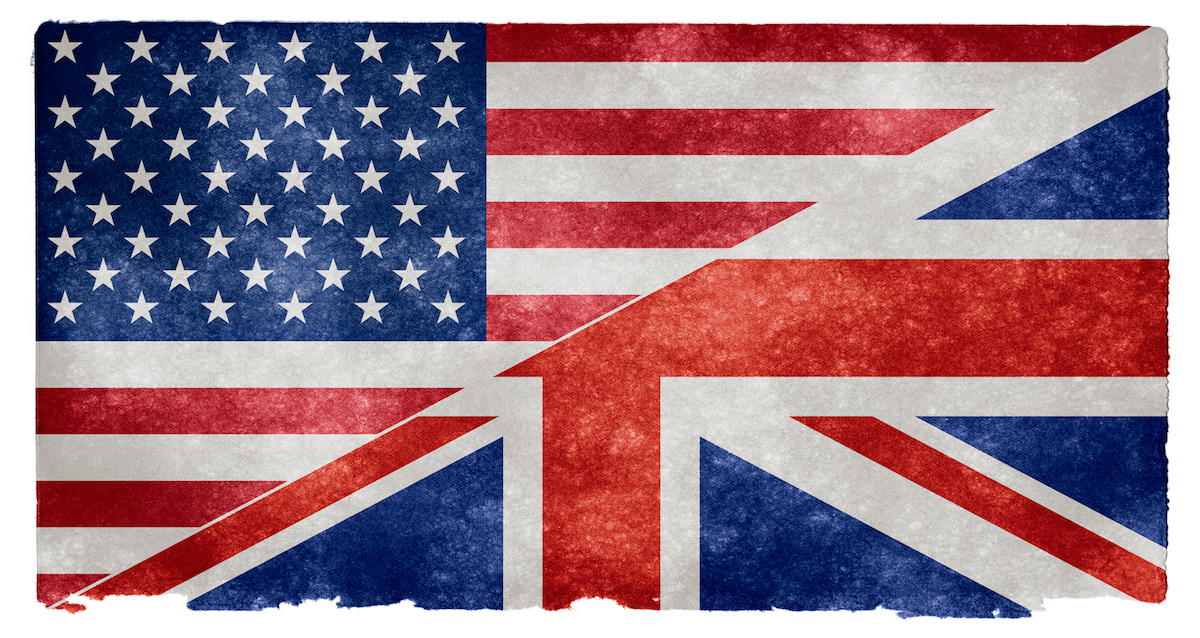
“Two nations divided by a common language.” Oscar Wilde
Not only are American and British words sometimes spelled differently (right there: spelled vs spelt), but often totally different words are used by speakers to express themselves. / No només les paraules americanes i britàniques s’escriuen de vegades de manera diferent (aquí mateix: spelled vs spelt), sinó que sovint els parlants utilitzen paraules totalment diferents per expressar-se. / No solo las palabras americanas y británicas a veces se escriben de manera diferente (aquí mismo: spelled vs spelt), sino que a menudo los hablantes utilizan palabras totalmente diferentes para expresarse.
Generally speaking, your texts will use British English, but it is a good idea to learn common American equivalent words to avoid confusion and misunderstanding. / En termes generals, els teus textos utilitzaran l’anglès britànic, però és una bona idea aprendre les paraules equivalents americanes comunes per evitar confusions i malentesos. / En términos generales, tus textos utilizarán el inglés británico, pero es una buena idea aprender las palabras equivalentes americanas comunes para evitar confusiones y malentendidos.
Here are ten American and British words that have the same meaning but, as you can see, are not similar in any way: / Aquí teniu deu paraules americanes i britàniques que tenen el mateix significat però, com podeu veure, no s’assemblen de cap manera: / Aquí tienes diez palabras americanas y británicas que tienen el mismo significado pero, como puedes ver, no se parecen de ninguna manera:
| AMERICAN / AMERICÀ / AMERICANO | BRITISH / BRITÀNIC / BRITÁNICO | TRANSLATION / TRADUCCIÓ / TRADUCCIÓN |
| stingy | mean | gasiu / tacaño |
| freeway | motorway | autopista / autopista |
| diaper | nappy | bolquer / pañal |
| Scotch tape | sellotape | cinta adhesiva / zel / celo |
| store | shop | botiga / tienda |
| candy | sweets | caramels / llaminadures / dulces / chuches |
| faucet | tap | aixeta / grifo |
| can | tin | llauna / lata |
| flashlight | torch | llanterna / linterna |
| thumbtack | drawing pin | xinxeta / chincheta |


SPANISH SPEAKERS (9)
English for Spanish Speakers (9)

Frequently Misused / Confused Words:
Here are a few pairs (or more) of words that sometimes confuse students (and native speakers):
Aquí tens alguns parells (o més) de paraules que de vegades confonen els estudiants (i els parlants nadius):
PALATE: The roof of your mouth. El paladar, la part superior de la boca. El paladar, la parte superior de la boca.
PALETTE: A board used by a painter to mix colors. Paleta de pintor per barrejar colors. Paleta de pintor para mezclar colores.
PALLET: A platform to hold large/heavy items. Palet, plataforma per transportar mercaderies. Palé, plataforma para transportar mercancías.
REIN: A literal or figurative strap to hold a person or animal under control; especially for horses. Regna, corretja per controlar un animal o, figuradament, una situació. Rienda, correa para controlar un animal o, en sentido figurado, una situación.
REIGN: To rule a people and/or territory; especially said of a king or queen. Regnar, governar un poble o territori. Reinar, gobernar un pueblo o territorio.
RAIN: Refers to the weather phenomenon. Pluja, fenomen meteorològic ·. Lluvia, fenómeno meteorológico.
FORMALLY: wWth proper consideration of “form,” properly, legally. Formalment, d’una manera correcta o legal. Formalmente, de manera correcta o legal.
FORMERLY: Once true or existing but no longer. Anteriorment, abans però ja n. Anteriormente, antes pero ya no.
e.g.: Means “for example,” and precedes the actual example. Vol dir «per exemple» i introdueix un exemple. Significa «por ejemplo» e introduce un ejemplo.
i.e.: Means “that is” or “that is to say,” and adds a clarification or restatement. Vol dir «és a dir» i aclareix o reformula una idea. Significa «es decir» y aclara o reformula una idea.